In conversations with Emergenetics Associates, I hear the same challenge come up again and again: employees know that their coworkers work differently, and translating that awareness into meaningful action is where things tend to break down.
That’s where flexing comes in.
“Flexing” in the context of the Emergenetics® framework is the intentional practice of stepping outside of your preferred Thinking and Behavioral styles to meet people where they are. It’s a skill, and like most competencies, it takes self-awareness [1] and consistent practice to develop. When you build this muscle, the return is significant.
The Impact of Flexing
Most of us default to the communication approach, pacing and work style that feel most natural to us. That’s normal!
The challenge is that when we don’t adjust to the people in front of us, we’re more likely to create intent–impact gaps [2]. What we mean to communicate doesn’t always align with how the message is received.
86% of workplace failures stem from poor communication and lack of collaboration [3]. In my experience, these breakdowns are typically the result of misunderstandings that arise from dissimilar working styles, not negative intent. Our capacity to adjust to others’ Thinking and Behavioral preferences will significantly shape the quality of our outputs and the trust between teammates.
It also plays a meaningful role in individual performance. Every employee benefits when they can modify their approach to the situation or task in front of them. Flexing goes hand in hand with cognitive agility [4], or the ability to quickly absorb new information and adjust thinking and problem-solving styles as conditions change.
Staff who can embrace different perspectives tend to navigate complexity more effectively, use diversity of thought to generate a better outcome and reduce friction along the way.
This skill is especially impactful for managers. Low engagement is estimated to cost the global economy $7.8 trillion annually [5], while personalizing the employee experience can raise engagement by 34% [6]. This creates a substantial opportunity. Leaders who adapt to the Thinking and Behavioral preferences of their people can amplify motivation, cultivate stronger connections between employees and their work and reduce the costly impact of disengagement.
What Flexing Looks Like in Practice
Flexing begins with understanding the four Thinking Attributes and three Behavioral Attributes [7].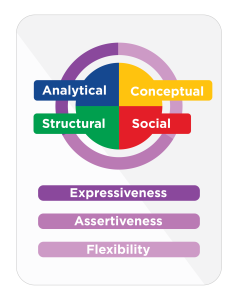 Consider a manager who leads in Conceptual Thinking. They naturally gravitate toward big-picture conversations and possibilities. Their direct report prefers Structural Thinking, focusing on the process and details. When the manager kicks off a meeting describing an imagined future state—without any clear steps or guidelines on how to get there—it can feel more disorienting than inspiring for the direct report.
!["If I don't cater to your preference, I may be sidetracking what's really important…or what [you] can bring to the equation." - Raymond Thomas, Co-founder, Enible](https://emergenetics.com/wp-content/uploads/2026/04/Flexing-Blog-Image-2.png) Flexing here invites the Conceptual manager to collaborate with the team on identifying the concrete steps needed to achieve this vision.
Flexing here invites the Conceptual manager to collaborate with the team on identifying the concrete steps needed to achieve this vision.
The same logic applies at all levels of the company, not just for supervisors and their direct reports. For example, this concept shows up when:
- An Analytical-leaning employee begins a conversation with a story before diving into the data while sharing insights with a teammate who prefers a more relationship approach.
- A Structurally-minded project manager creates space for flights of fancy that fall outside of the stated agenda while collaborating with a Conceptual-leaning team.
- A Social Thinker builds on the anecdotes they’ve heard about their customer onboarding journey by incorporating performance analytics to guide improvements.
For more inspiration on what flexing looks like through the lens of Emergenetics, read our Brilliance series blogs on the Analytical [8], Structural [9], Social [10], Conceptual [11], Expressiveness [12], Assertiveness [13] and Flexibility [14] Attributes.
4 Tools to Sharpen the Ability to Flex
 As you practice adapting to others, it’s important to remember: Flexing isn’t about losing yourself; it’s about expanding your range. Your preferences are still your preferences. By stretching yourself, you are making a relational investment and a performance investment.
Research from McKinsey & Company reinforces the importance of adaptability, revealing that leaders today must be “versatile” and able to expand their range to different situations [15]. As for employees, those who are adaptable report higher levels of innovation than their peers [16].
To help your stakeholders succeed, Associates can use a variety of Emergenetics resources.
1) Attributes in Action guide
Our complimentary Attribute in Action guides in Emergenetics+ [17] help leaders, managers and individuals implement Emergenetics into their daily work and get easy-to-use tips to embrace different Thinking and Behavioral styles.
A few of my favorite templates include:
- Communicating with Direct Reports
- Giving Feedback
- Communicating Effectively
- Setting Goals
- Resolving Disagreements
- Running an Effective Meeting
Practice flexing using these resources by inviting employees to first identify the Profile of the person they are communicating with. Then, instruct them to speak to this individual’s MPA (Most Preferred Attribute), while considering the delivery given their colleague’s Behavioral preferences.
2) Emergenetics+ interaction tips
Encourage employees to connect with one another on Emergenetics+. When they do, they will get customized communication and interaction tips to adapt their approach to whomever they are collaborating with. They can also create saved groups that reflect the departments or teams they work with most often.
In addition, further integrate the insights from Emergenetics+ into the flow of work by inviting staff to review their interaction tips with teammates before one-to-one and team meetings. This will help personnel be mindful of potential blind spots while supporting adaptability.
3) egLearning Course Companion
Our Learn to Flex: Thinking to Build Connection and Learn to Flex: Behaving to Improve Rapport egLearning Library courses offer short, asynchronous ways for employees to build their capacity to honor different Thinking and Behavioral preferences.
You can also use our companion guides for a blended learning experience. These guides outline activities for 1:1 follow-up as well as team exercises to help individuals apply the recommended strategies in their day-to-day.
4) Mastery Mondays: Speedback – The Art of Real-Time Feedback
Our Associate professional development session, Speedback: The Art of Real-Time Feedback, focuses on a simple yet powerful practice: Personalizing and delivering consistent input. The insights from this session expand on the concept of flexing in growth conversations between managers and direct reports.
By harnessing the skill of speedback [18], you can empower managers to reduce intent-impact gaps and create feedback practices that move the needle.
Discomfort Is Part of Growth
Flexing requires you to operate outside your natural preferences, which means, at times, it will feel uncomfortable. That stretch isn’t a sign you’re doing it wrong. It means that you’re growing.
As an Associate, when you model flexing to your stakeholders and provide strategies to help them practice their skills, you will make space for every individual to bring their full brilliance to work.
 [19]Looking to expand your stakeholders’ adaptability? Explore the egLearning Library courses [20] or fill out the form below to speak with a member of our team.
Frequently Asked Questions
What does “flexing” mean?
Flexing is the intentional practice of adjusting your Thinking and Behavioral styles to meet others where they are.
Why is flexing important in the workplace?
It improves communication, reduces misunderstandings and increases engagement by aligning your approach with how others prefer to think and interact.
Who can benefit from flexing?
Everyone. Flexing is not just for people leaders. Personnel at all levels can benefit from modifying their approach to enhance working relationships and improve their cognitive agility.
Is flexing the same as changing your personality?
No. Adapting your approach is not about changing who you are. It’s about expanding your range so you can connect more effectively with different people and embrace perspective taking to strengthen your problem-solving capabilities.
Why does flexing feel uncomfortable?
When meeting others where they’re at, you’ll likely step outside of your natural preferences, which can feel unfamiliar. That discomfort is a normal part of growth, and it gets easier with practice!